Codebreaking the Glass Ceiling:
Women on the Frontier of WWII Cryptanalysis
Macchina Crittografica Elettromeccanica - Enigma. The National Museum of Science and Technology.
In the 1920s, as radio technology advanced, radio interception was imminent. Since the German military did not want their opponents to understand their transmissions, they turned to cryptography, the study of creating encrypted text. As German cryptography evolved, the allies needed to advance their cryptanalysis, or codebreaking, to match them. The few cryptanalysts, like American Elizebeth Friedman who decrypted smugglers’ messages during prohibition, suddenly became crucial.
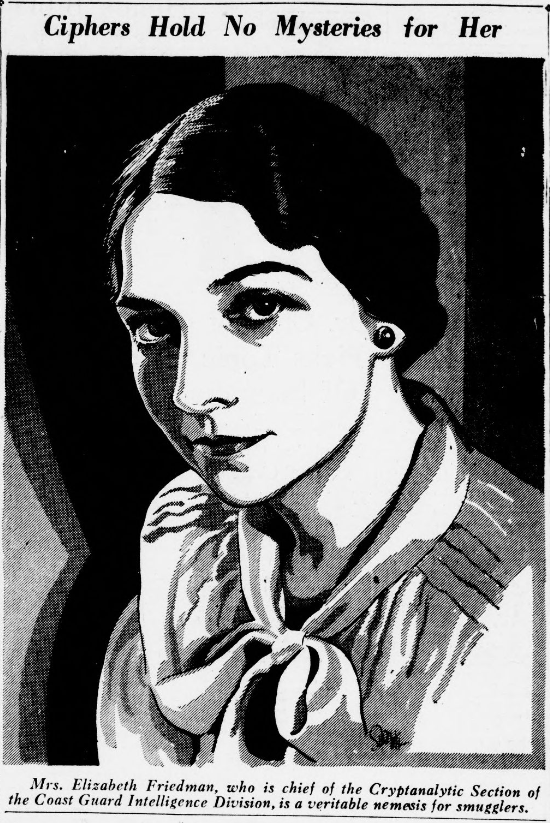 Local Matron Decodes
Cryptic Messages for Treasury Department. The Evening Star Washington DC. June 5, 1937.
Local Matron Decodes
Cryptic Messages for Treasury Department. The Evening Star Washington DC. June 5, 1937.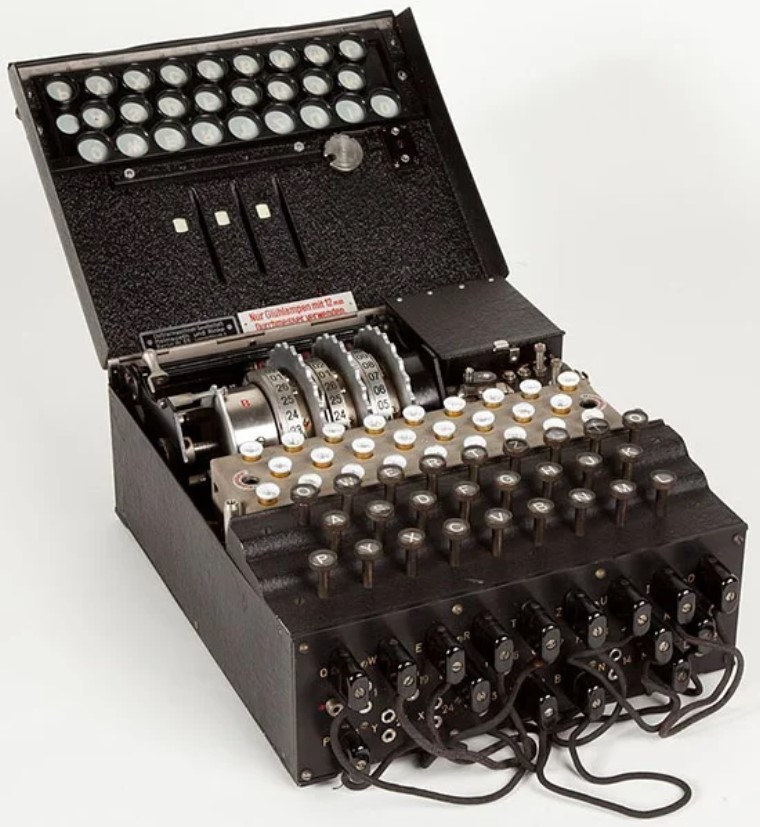 Macchina
Crittografica Elettromeccanica - Enigma. The National Museum of Science and Technology.
Macchina
Crittografica Elettromeccanica - Enigma. The National Museum of Science and Technology.The German military encrypted all radio transmissions with an enigma machine. When a message was typed into the enigma’s keyboard, it would output an encrypted version based on the positions of three rotatable rotors. Each letter translated to one other letter and could be decrypted by another enigma machine, provided all three rotors were in the same positions as during the message’s initial encryption. Each rotor had 26 possible positions, represented by one letter, with 17,576 possible three-letter combinations. The German military used one combination for all messages sent on a given day. They often used guessable three-letter combinations like words or names. Still, no reliable way of deciphering the rotors’ positions existed.
In 1928, the Polish military, regularly intercepting German radio transmissions, noticed the introduction of machine encryption. By 1932, Polish mathematician Marian Rejewski replicated the German military’s enigma machine.
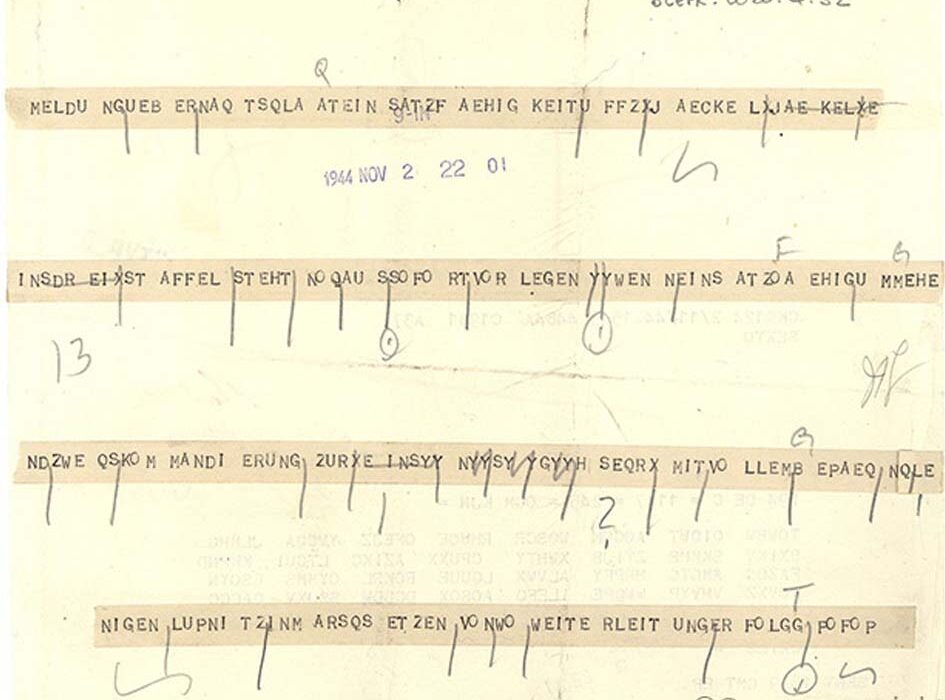 Enigma Red
Messages. Bletchley Park Museum. November 2, 1944.
Enigma Red
Messages. Bletchley Park Museum. November 2, 1944.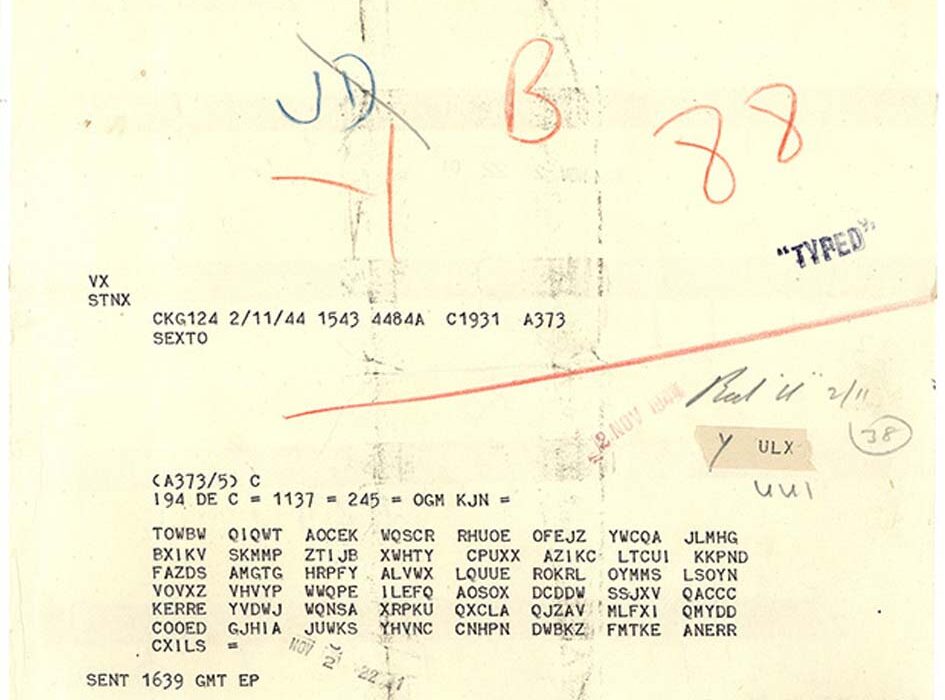 Enigma Red
Messages. Bletchley Park Museum. November 2, 1944.
Enigma Red
Messages. Bletchley Park Museum. November 2, 1944.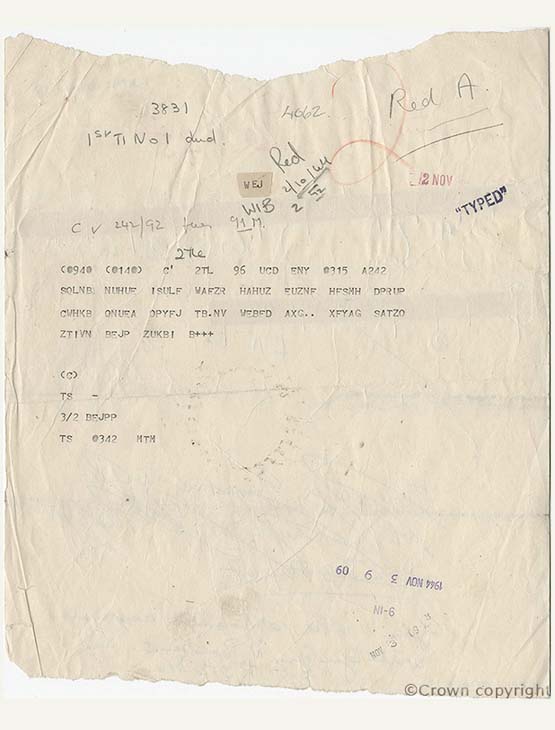 Enigma Red
Messages. Bletchley Park Museum. November 3, 1944.
Enigma Red
Messages. Bletchley Park Museum. November 3, 1944.