Codebreaking the Glass Ceiling:
Women on the Frontier of WWII Cryptanalysis
Arlington Hall. United State Departement of Defense.
“But the men used to say, ‘Oh, women can’t keep a secret. Women are dumb and . . .’ But anyway, we
showed
them.” -
Veronica Hulick, WAVES Officer
The little-known story of the Navy women codebreakers who helped Allied forces win WWII. CNN. August
2020.
Codebreakers were sworn to secrecy. Others assumed they had secretarial or laboring jobs, as these women were not permitted to explain the complexity and prestige of their work.
“When they had taken us into the chapel and told us that what went on at this station was top secret
and
‘Just don’t
think because you’re women you’ll get any special consideration. If you talk about what goes on
here,
you will be shot.’
And you could have heard a pin drop in that chapel.” - Veronica Hulick, WAVES Officer
Often, though, codebreakers weren’t even told what they themselves were doing.
“And then after I read [a book on cryptanalysis] I realized, well I had to have been on a four wheel
Enigma machine and
then I know that the officer of the day that I worked under once in a while would sometimes bring
special runs out to me
and so I knew that whatever I was doing must have been different from what someone else was doing.”
-
Sue Unger, WAVES Officer
Because of high levels of secrecy, many codebreakers did not know how their own work fit into the larger picture. They each contributed a piece to a puzzle that is still classified today. In fact, many of them were unaware of the many Black women also at the frontier of cryptanalytic work. An estimated 15% of the women at Arlington Hall were Black. A large group of these Black female cryptanalysts was led and recruited by William Coffee, a Black man. Despite strong racial discrimination, Coffee led his unit to make impactful codebreaking contributions and was later awarded the Commendation for Meritorious Civilian Service.
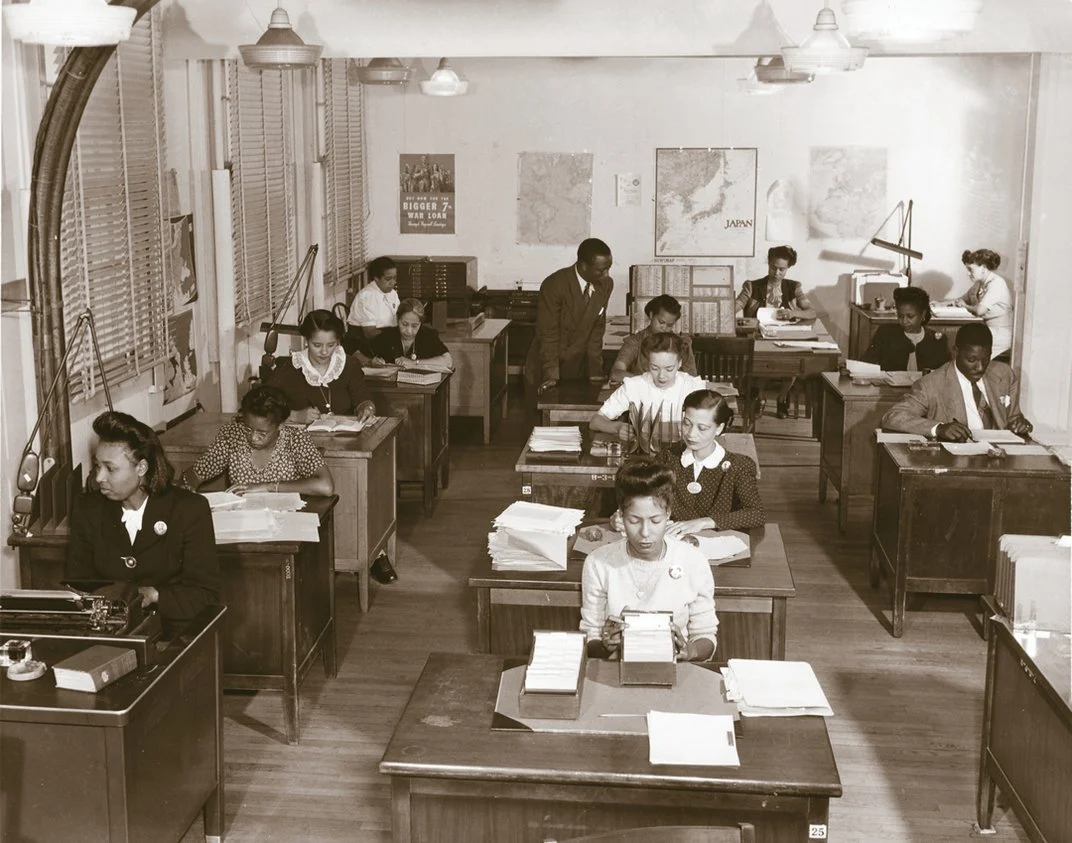 African-American Codebreaking Unit. National Security
Agency
African-American Codebreaking Unit. National Security
Agency
African-American Codebreaking Unit. National Security
Agency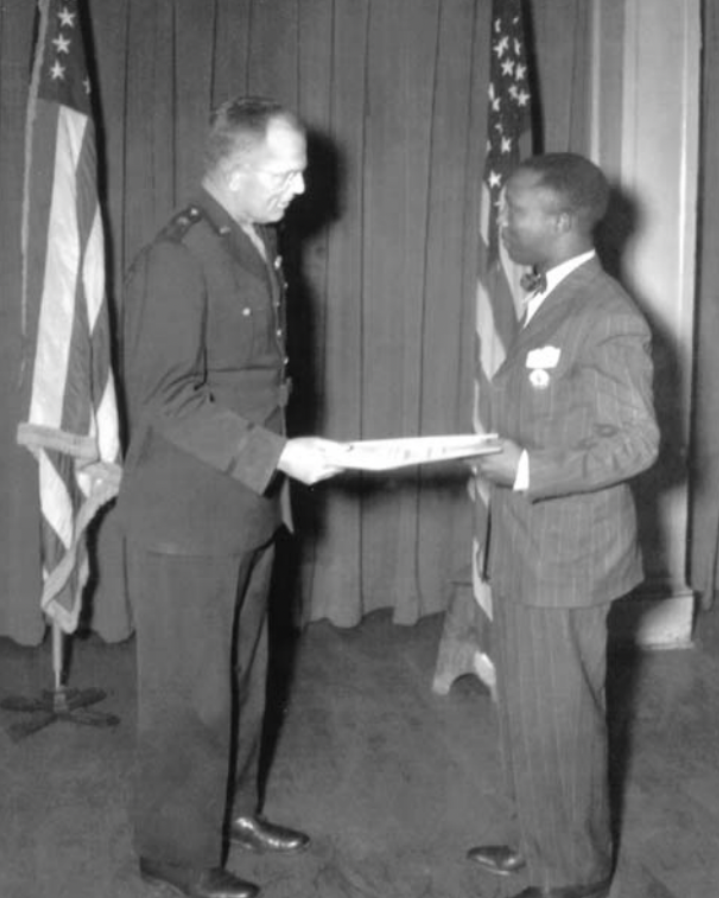 William Coffee
Receiving Meritorious Service Award. 1946.
William Coffee
Receiving Meritorious Service Award. 1946.