Codebreaking the Glass Ceiling:
Women on the Frontier of WWII Cryptanalysis
Smith, Dan V. WAAC - This is My War Too!. Hennepin County Library. 1943.
U.S. NAVY WAVES - Women Accepted for Volunteer Emergency Service. Periscope Film. Ca. 1942.
Although the women in WAVES received naval officer status, they were treated differently from male officers. WAVES officers’ rankings in the navy were limited. WAVES’ leader Mildred McAffee was given the rank lieutenant commander, but after her, only 35% of WAVES officers were permitted to attain the lieutenant rank. Similar restrictions on power were placed on WAAC. Ranks were limited to below colonel, and WAAC officers could never command men.
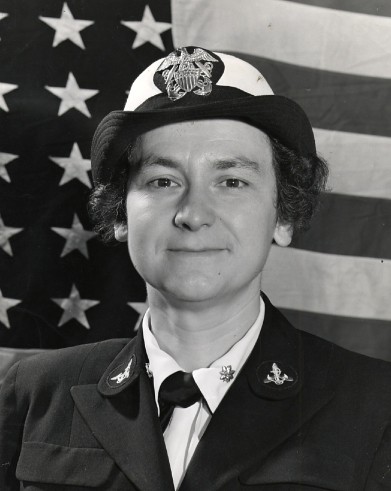 McAfee in her
uniform for the Naval Reserve. Vassar.
McAfee in her
uniform for the Naval Reserve. Vassar.
McAfee in her
uniform for the Naval Reserve. Vassar.
“I investigated the WACS and the WAVES and I decided I wanted to become a WAVE because their standards
were higher and I
liked the uniforms. I thought we looked more like ladies than the WACS did. There were so many things
that I considered
in these comparisons. So I made up my mind I was going to be a WAVE.” - Sue Unger, WAVES Officer
In 1948, the Women’s Armed Service Integration Act was passed. Previously, military women were considered temporary, but after 1948, women became permanently part of the military. WAAC and WAVES were each allowed one officer with the rank of colonel, or the naval equivalent, captain. Still, only 2% of each military branch was allowed to be women.
U.S. NAVY WAVES - Women Accepted for Volunteer Emergency Service. Periscope Film. Ca. 1942.
“[I]f the Navy could possibly have used dogs or ducks or monkeys, certain of the older admirals would
probably have
greatly preferred them to women.” - Virginia C. Gildersleeve, Chair of the Advisory Council of WAVES
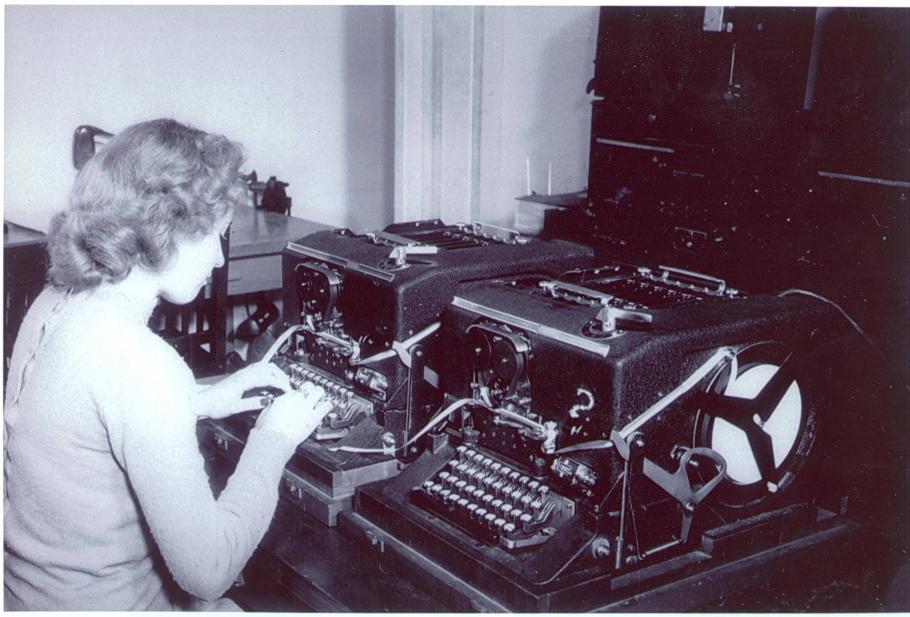 Women in the
Women's Army Corps during World War II served in the Army Signal Intelligence Service or the
2nd Signal
Service Battalion operating Sigaba machines, decrypting messages, and intercepting and forwarding
enemy coded messages.
National Cryptographic Museum.
Senators disapproved of women working in the military. Attempting to prevent this, they wanted to ensure that women only held desk jobs. Some WAVES and WAAC jobs could be considered desk-bound, including the challenging job of codebreaking.
Women in the
Women's Army Corps during World War II served in the Army Signal Intelligence Service or the
2nd Signal
Service Battalion operating Sigaba machines, decrypting messages, and intercepting and forwarding
enemy coded messages.
National Cryptographic Museum.
Senators disapproved of women working in the military. Attempting to prevent this, they wanted to ensure that women only held desk jobs. Some WAVES and WAAC jobs could be considered desk-bound, including the challenging job of codebreaking.